
US-China AI safety talks – notification mechanism: Guide
US-China AI safety talks - notification mechanism: As of 2026-09-23 the U.S. proposed a cross-border notification channel in US-China AI safety talks - notific…
View article sections
- 01What changed on Sept. 20, 2026 — and why it matters
- 02What the phrase “US-China AI safety talks – notification mechanism” means here
- 03Who should care: device makers, cloud providers, SMBs, and consumers
- 04How a notification mechanism might work (analysis and common models)
- 05Benefits and limitations — practical view for SMBs and consumers
- 06Likely problems and practical obstacles
- 07Practical next steps for small businesses and consumers (as of 2026-09-23)
- 08Comparison: current incident-reporting norms vs. a bilateral notification channel
- 09Alternatives and related standards to track
- 10Costs, availability, and enforceability — what to expect
- 11What to watch next — timeline and monitoring
- 12Independent reporting and industry reaction
- 13Bottom line for small businesses and consumers
- 14Sources and attribution
- 15FAQs
- 16Related guides and resources
- 17Frequently asked questions
- 18Need practical help?
What changed on Sept. 20, 2026 — and why it matters
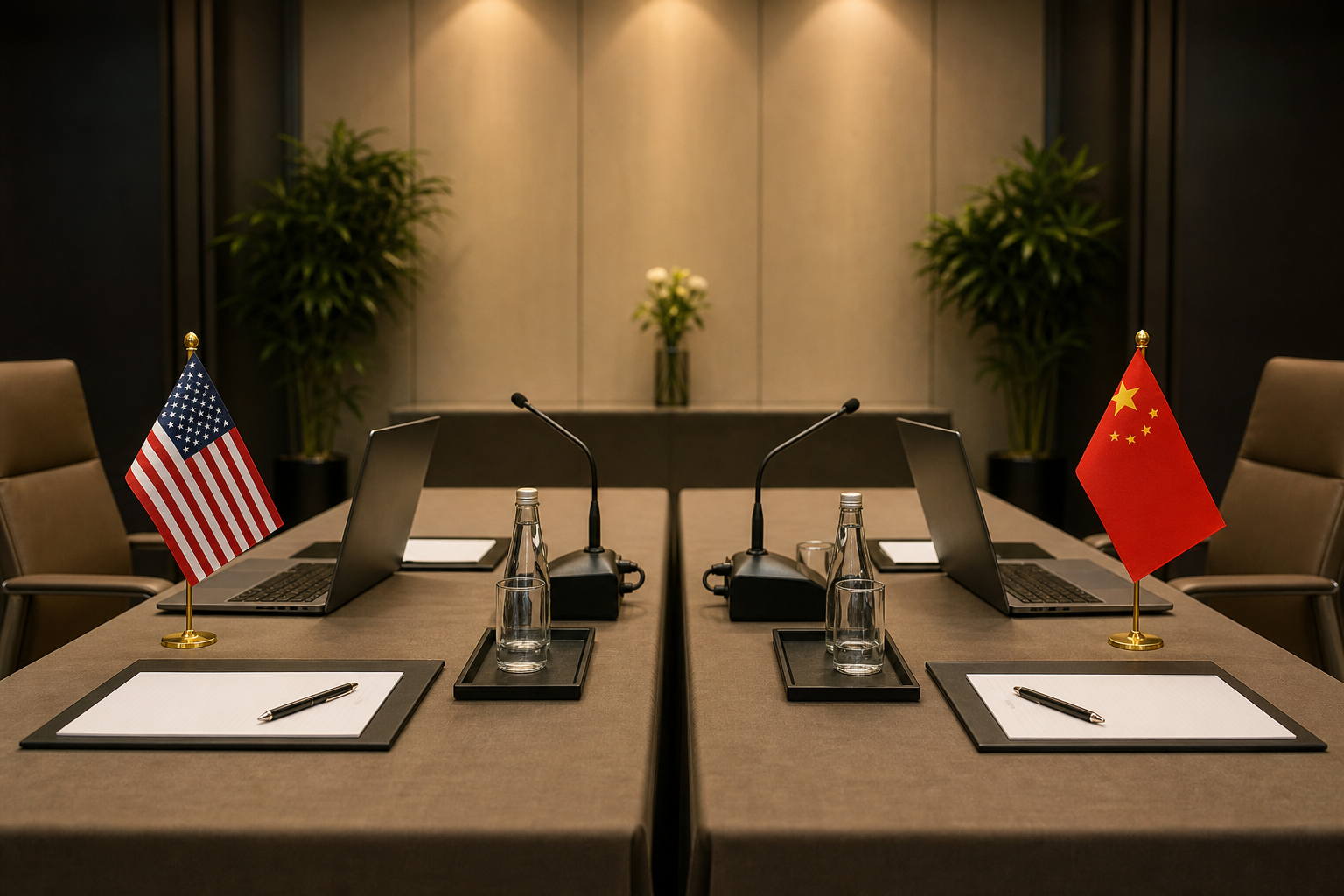
On Sept. 20, 2026 U.S. Treasury Secretary Scott Bessent raised a proposal for a formal notification channel with China during talks with Chinese Vice Premier He Lifeng — a development that could reset cross-border incident expectations for AI operators and vendors [1]. This proposal, framed as a US-China AI safety talks – notification mechanism, aims to create a near-term diplomatic channel for reporting safety incidents. Confirmed facts are limited to the public statement that the idea was raised; details remain to be negotiated [1].
Confirmed facts, reporting, and context
Confirmed facts: Secretary Bessent brought up a notification mechanism during the Sept. 20 meeting with Vice Premier He Lifeng, according to reports summarizing the talks [1]. Independent reporting also notes that companies and governments are publicly discussing standards and disclosure after these talks [2][3].
What the phrase “US-China AI safety talks – notification mechanism” means here
The phrase US-China AI safety talks – notification mechanism refers to a proposed bilateral channel to notify the other government about AI safety incidents, vulnerabilities, or potentially hazardous model behavior. As of 2026-09-23 the proposal is a diplomatic concept, not an implemented rule or treaty [1].
Who should care: device makers, cloud providers, SMBs, and consumers
Small businesses that integrate third-party AI services, cloud-hosted models, or edge devices could see new cross-border disclosure expectations. Likewise, device makers and cloud providers that operate globally may face added reporting steps, contractual changes, or compliance obligations. Consumers should watch for changes in transparency about major incidents that could affect data or device safety.
Confirmed and probable impacts
- Confirmed: The proposal was publicly raised during high-level talks on Sept. 20, 2026 [1].
- Probable: Negotiations will determine scope, timelines, and enforcement; these could affect incident reporting requirements for vendors and customers (analysis).
- Estimated: If implemented, cross-border notifications could require providers to share technical summaries or mitigation steps with the other government within defined windows (estimate).
How a notification mechanism might work (analysis and common models)
There is no finalized design yet. However, practical models from past international technical sharing suggest the mechanism could include:
- a defined category list of incidents that trigger notifications (e.g., safety-critical misbehavior, model escapes, deliberate misuse);
- time-bound reporting windows for initial notice and follow-ups;
- encrypted technical disclosures or redacted technical summaries to protect commercial secrets; and
- liaison points at ministries or designated agencies to receive and coordinate responses.
Analysis: such features balance rapid information flow with protections for intellectual property and national security. Nevertheless, cross-border politics, differing regulatory frameworks, and export-control concerns complicate practical design.
Benefits and limitations — practical view for SMBs and consumers
Potential benefits:
- Faster awareness of shared hazards that could affect cloud services, APIs, or embedded AI devices.
- Possibility of coordinated mitigation actions that reduce cascading outages or harms.
- Stronger international norms encouraging vendors to adopt best practices and transparency.
Key limitations and risks:
- Scope uncertainty: early proposals rarely specify which incidents qualify, so businesses may face ambiguous expectations.
- Timing and reciprocity: one-sided or delayed notifications could limit effectiveness.
- Commercial sensitivity: vendors may resist sharing technical details that reveal proprietary models or security controls.
- Jurisdictional friction: Chinese and U.S. legal and regulatory frameworks differ, creating conflicts over data transfer and law enforcement access.
Likely problems and practical obstacles
Even if governments agree in principle, several operational challenges must be resolved before any notification channel helps small businesses or consumers.
- Authentication and trust: How will each side verify that reports come from legitimate operators or agencies?
- Definitions: What constitutes a reportable safety incident versus routine bugs or degraded performance?
- Commercial pushback: Vendors may seek carve-outs, especially for intellectual-property‑sensitive diagnostics.
- Enforcement: Will notifications be voluntary, strongly encouraged, or mandatory under future law?
Practical next steps for small businesses and consumers (as of 2026-09-23)
Confirmed reporting rules do not yet exist, so immediate changes are not mandatory. Nevertheless, organizations that use or supply AI services should prepare now to reduce later costs and disruptions.
For small businesses (SMBs) that use third‑party AI services
- Inventory AI dependencies. Know which cloud providers, SaaS vendors, and embedded-device suppliers power your AI features.
- Review contracts and SLAs for incident notification terms. Vendors may add cross-border reporting clauses; negotiate clarity around confidentiality and timelines.
- Strengthen incident detection. Faster internal detection reduces reliance on external disclosures and helps you comply with any future notification windows.
- Create internal playbooks. Map who to contact if a vendor informs you of an AI safety incident that affects your product or data.
For device makers and cloud providers
- Prepare secure, auditable reporting pipelines and designate liaisons for international notices.
- Assess export-control and data-transfer risks that intersect with cross-border notifications.
- Engage in standards efforts. Participation can shape definitions, reporting formats, and acceptable redaction practices.
For consumers
- Watch vendor advisories and transparency reports. They may offer summaries of incidents and mitigations.
- Limit exposure for sensitive tasks to providers and models with clear safety governance and incident history.
Comparison: current incident-reporting norms vs. a bilateral notification channel
| Dimension | Typical current practice (as of 2026-09-23) | Possible notification channel outcome |
|---|---|---|
| Triggering events | Varies by vendor; often security breaches and service outages | Standardized list including specific AI safety incidents |
| Speed of notice | Vendor-dependent; may be slow or internal only | Defined time windows for initial notice and follow-up |
| Cross-border sharing | Limited, constrained by laws and contracts | Channel aims to enable government-to-government sharing; vendor obligations unclear |
| Confidentiality | Vendors often redact technical details | Protocols for redaction and secure technical sharing expected |
Alternatives and related standards to track
While the bilateral notification idea moves through diplomacy, industry and multilateral efforts may offer complementary or competing approaches. For instance, private-sector safety coalitions, standard bodies, and multilateral organizations have published voluntary reporting templates and best practices. Independent reporting also shows companies pushing standards after the talks [2][3]. Tracking those efforts can give SMBs practical templates to use now (analysis).
Costs, availability, and enforceability — what to expect
Cost: Implementation costs will fall on platform operators and larger vendors first. SMBs will mainly face compliance and contract-management costs when vendors change SLAs. Availability: No channel is yet operative; any operationalization will take months or longer. Enforceability: Unless converted into law or formal agreements, a notification mechanism may be voluntary or politically binding at first. This is an estimate based on past diplomatic timelines (estimate).
What to watch next — timeline and monitoring
- Short term (weeks to months): Official joint statements or follow-up meetings that set scope and next steps (analysis).
- Medium term (3–12 months): Draft protocols, pilot programs, or industry guidance that show how notifications would work in practice.
- Long term (12+ months): Legislative or regulatory steps in one or both countries that could make reporting mandatory for certain operators (estimate).
Independent reporting and industry reaction
Independent reporting after the Sept. 20 talks highlighted broader discussions about AI standards and safety among governments and industry. Media coverage indicates that major AI producers and research organizations are debating standardized approaches to safety and disclosure, and that public proposals and private negotiations are taking place in parallel [2][3].
Bottom line for small businesses and consumers
As of 2026-09-23 the US-China AI safety talks – notification mechanism is a concrete diplomatic proposal, not an implemented rule [1]. For small businesses and consumers, prepare by cataloging AI use, tightening incident detection, reviewing contracts, and monitoring vendor advisories. In the near term, practical preparedness will be a lower-cost way to reduce risk if cross-border reporting expectations tighten.
Action checklist (quick)
- Inventory AI systems and dependencies today.
- Update incident response playbooks to include vendor notifications.
- Ask vendors about potential cross-border reporting clauses and confidentiality protections.
- Follow official statements and industry standards work to anticipate format and timing changes.
Sources and attribution
Confirmed facts in this article rely on public reporting of the Sept. 20, 2026 talks in which Secretary Bessent proposed a notification mechanism [1]. Additional context on standards discussion and industry reaction comes from independent reporting that followed the talks [2][3].
FAQs
See the FAQ section below for concise answers to common questions about the US-China AI safety talks – notification mechanism and how to respond.
Frequently asked questions
What exactly did the U.S. propose on Sept. 20, 2026?
Confirmed reporting states that U.S. Treasury Secretary Scott Bessent raised a proposal for a bilateral notification channel with China to share information about AI safety incidents during talks with Vice Premier He Lifeng on Sept. 20, 2026 [1]. The idea has been publicly floated, but no operational details or agreements were announced as of 2026-09-23 [1].
Will this proposal immediately change vendor contracts or SLAs?
No. As of 2026-09-23 the proposal is a diplomatic concept, not a regulation. Vendors may begin discussing contract language or industry groups may propose templates, but mandatory contract changes would usually follow negotiated protocols, pilots, or new laws (analysis).
How should my small business prepare now?
Practical steps include inventorying AI systems and suppliers, improving internal incident detection, updating incident-response playbooks to include vendor notifications, and reviewing SLAs for confidentiality and notification clauses. These actions reduce disruption if notification expectations change.
Could vendors be forced to disclose proprietary model details to a foreign government?
That depends on negotiation outcomes. Likely designs aim to protect commercially sensitive information via redaction or secure summaries. However, legal and national-security exceptions could create pressure; businesses should assess export-control and data-transfer risks (estimate).
How long before any notification channel affects operations?
Timelines vary. Short-term clarifications or pilot programs might appear within months, while formal protocols, standards, or laws could take a year or more. Monitoring official statements and industry pilots is the best way to track progress (estimate).
Need practical help?
Fixit Solutions Inc. — Contact Fixit Solutions today to request a free estimate, schedule a repair or discuss your business technology needs. Service area: Lake Forest, CA.
Topic in context

Sources and further reading
These links were validated and checked when possible when this article was created; some publishers limit automated requests. Facts, guidance, prices, regulations, and availability can change.
- Bessent proposes US-China AI safety notifications in talks with Chinese vice premier — Reuters (republished on Investing.com) — primary source
- OpenAI proposes AI standards after U.S., China talks — Axios
- China and the US are competing for AI dominance but have shared concerns over safety — AP News