
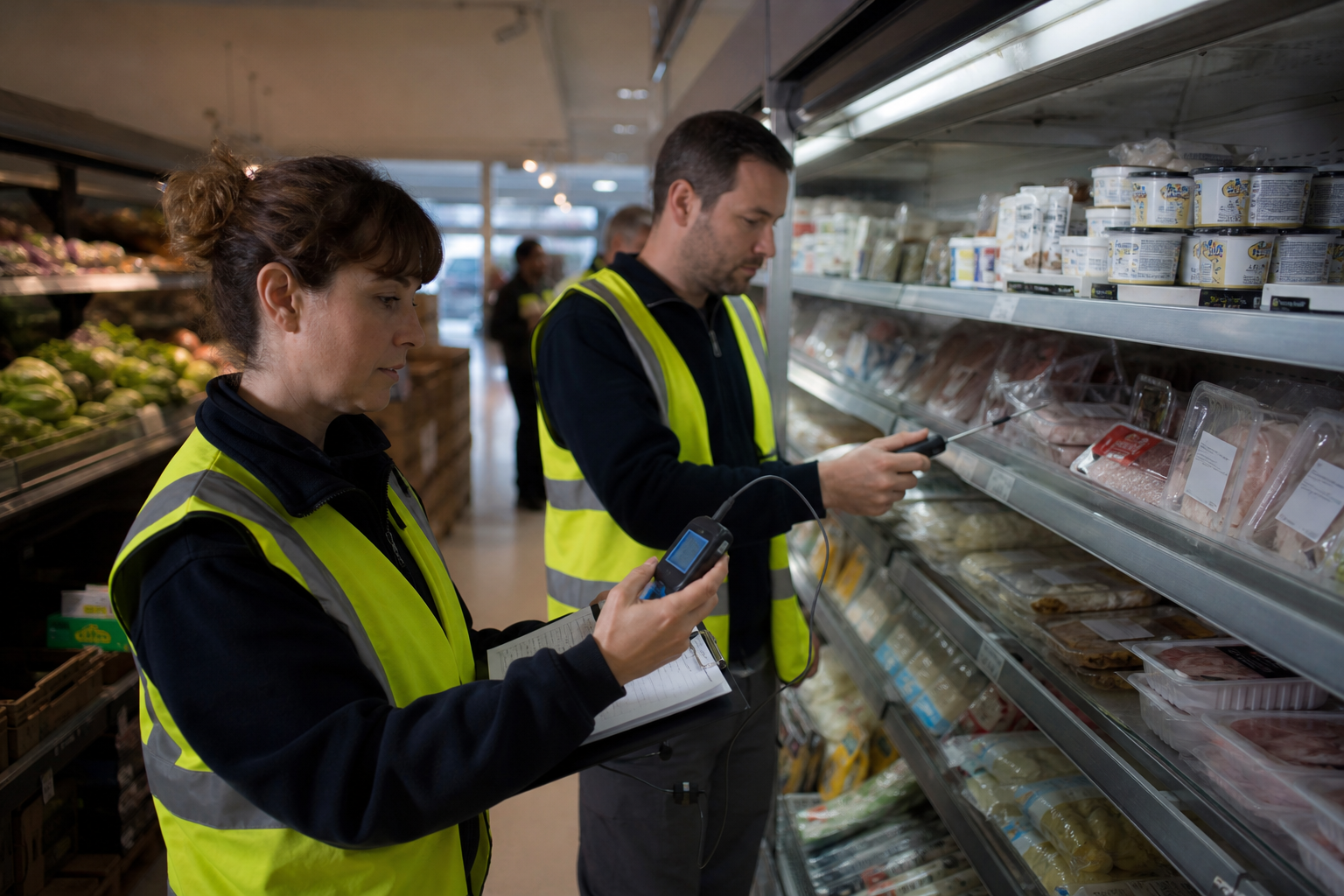
French supermarket refrigeration cyberattack Danfoss response
French supermarket refrigeration cyberattack Danfoss: How the French supermarket refrigeration cyberattack Danfoss forced fridges into defrost, sparked fires a…
View article sections
- 01What happened on Oct 12, 2026 — confirmed details
- 02Why the French supermarket refrigeration cyberattack Danfoss matters to SMBs and retailers
- 03Technical explanation — how an attack like this can occur
- 04Immediate actions for SMBs and retailers (priority checklist)
- 05Communications guidance for stores and small chains
- 06Costs, insurance, and recovery — what to expect
- 07Longer-term steps to reduce risk
- 08Comparison: legacy refrigeration controls vs secure modern approaches
- 09Who should upgrade, wait, or avoid certain controls
- 10Practical next steps checklist (12 items)
- 11What investigators and vendors are saying (confirmed vs analysis)
- 12How Fixit Solutions Inc. can help (local services)
- 13Final takeaway
- 14Reader FAQs
- 15Related guides and resources
- 16Frequently asked questions
- 17Need practical help?
- 18Topic in context
French supermarket refrigeration cyberattack Danfoss is the focus of this dated, source-based update. As a result, the article separates verified details from analysis.
What changed (Oct 12, 2026) and why it matters: On Oct 12, 2026 a confirmed cyberattack remotely forced display fridges and freezers in French supermarkets into continuous defrost cycles, with temperatures reported up to 50°C and multiple stores reporting fires and large food losses. This incident affects any business that uses networked refrigeration or building controls, including small and medium retailers and food-service operators, and requires immediate technical and communications responses [1][2][3].
What happened on Oct 12, 2026 — confirmed details
Confirmed facts: attackers manipulated refrigeration controllers so units entered repeated defrost modes, causing sustained high temperatures, equipment damage, and at least some fires. Independent reporting and technical write-ups indicate the disruption was broad and affected multiple supermarket chains and delivery systems in France and parts of Europe [1][2][3]. (As of Oct 12, 2026.)
Official announcements about the scope and attribution were limited at publication time. Reuters reported the fires and losses and stated investigators were working to determine the attack vector and whether a single group was responsible [1]. Tom’s Hardware and BleepingComputer provided additional technical context and observed patterns consistent with attacks on industrial IoT/OT devices and building-management endpoints [2][3].
Confirmed impact (as of Oct 12, 2026)
- Fridges and freezers forced into continuous or repeated defrost cycles, with temperatures reported up to 50°C [1][2][3] (confirmed reporting).
- Multiple store fires and widespread food loss reported; financial impact in the millions of euros is being estimated by affected chains and insurers (independent reporting and early estimates) [1][2].
- Supply-chain disruption and delivery interruptions were reported in affected areas, and pricing systems were also reportedly impacted in some locations [2].
Why the French supermarket refrigeration cyberattack Danfoss matters to SMBs and retailers
Many small retailers and hospitality businesses use internet-connected refrigeration controls, either directly or through suppliers. If your refrigeration controller, HVAC, or building automation system is networked, it could have the same exposure as systems hit in this attack.
In plain terms: a compromised controller can alter temperatures, disable alerts, or cause equipment stress that leads to fire. For stores and small businesses that handle perishable inventory, the result can be unsalable stock, costly cleanups, legal exposure, and downtime. You should treat this incident as a wake-up call to audit refrigeration and OT security now.
Technical explanation — how an attack like this can occur
Independent technical coverage suggests attackers targeted controllers and building-management endpoints often exposed via weak remote-access configurations, unpatched firmware, or compromised vendor tools [2][3]. Common vectors include:
- Default or weak device credentials and open remote management ports.
- Unpatched firmware with known vulnerabilities in refrigeration controllers or associated gateways.
- Supply-chain access through vendor remote maintenance tools or cloud services used by multiple stores.
Once inside a controller or management appliance, attackers can trigger defrost cycles, change temperature setpoints, or disrupt alarms. In this incident, attackers reportedly caused cyclic defrost behavior and disabled normal safeguards, producing high temperatures and equipment stress that contributed to fires [2][3]. This is analysis based on reported indicators and typical OT compromise patterns, not an official attribution.
Why Danfoss appears in reporting
Some reporting has mentioned Danfoss because the company manufactures refrigeration controls and components widely used in commercial refrigeration. However, confirmed public statements from vendors and investigators were limited at the time of reporting. Treat any vendor linkage as evolving: it may be confirmed, refined, or refuted as investigators publish findings (as of Oct 12, 2026) [1][2].
Immediate actions for SMBs and retailers (priority checklist)
Take these steps now if you operate retail refrigeration or building controls. Label: practical immediate response (action list combines confirmed good practice and incident-driven priorities).
- Isolate affected systems: if you can safely disconnect refrigeration controllers from external networks, do so immediately. Prioritize safety and follow fire-safety procedures first.
- Switch to manual monitoring: if possible, monitor temperatures with independent thermometers and logs and move perishables to safe storage.
- Contact your vendors and maintenance providers: notify equipment vendors and maintenance contractors of the incident and ask for emergency guidance and firmware checks.
- Preserve logs and evidence: save controller logs, network captures, and device images for investigators and insurers.
- Notify insurers and local authorities: report fires and losses to your insurer and local fire and police authorities as required.
- Implement temporary mitigations: block remote management ports at the network firewall, disable vendor remote access if feasible, and require multi-factor authentication for vendor portals.
- Communicate with customers and staff: prepare clear, factual statements about product safety, refunds, and closures if needed (see communications guidance below).
Communications guidance for stores and small chains
Transparent and timely communication reduces reputational damage. Independent reporting indicates public concern over food safety and fire risk [1][2]. Follow these steps:
- State facts you know and label analysis vs confirmed findings.
- Explain immediate customer-facing steps (refunds, closures, safety checks).
- Tell customers how to get updates and who to contact for refunds or claims.
- Coordinate with regulators and health inspectors before reopening food-handling areas.
Costs, insurance, and recovery — what to expect
Costs include spoiled inventory, equipment repair or replacement, business interruption, cleanup, and potential liability. Early reports mention losses in the millions of euros across affected operators, but your actual exposure depends on inventory value, insurance coverage, and business continuity plans [1][2].
Insurance: notify your provider immediately, and preserve evidence. Insurers will want logs, photos, invoices, and maintenance records. Some policies may require prompt mitigation steps to remain eligible for coverage.
Longer-term steps to reduce risk
After immediate recovery, plan upgrades and policy changes that reduce future exposure:
- Network segmentation: separate OT (refrigeration, HVAC) from POS and guest Wi‑Fi, with strict ACLs.
- Vendor management: require secure vendor access (MFA, jump boxes, audited sessions) and limit remote privileges.
- Firmware and asset management: maintain an inventory of controllers, track firmware versions, and apply vendor patches promptly.
- Monitoring and alerts: add independent temperature telemetry and redundant alarms that do not rely on the same controller or network path.
- Incident drills and response plans: test staff procedures for refrigeration failures and cybersecurity incidents.
Comparison: legacy refrigeration controls vs secure modern approaches
| Dimension | Legacy (common today) | Secure modern approach |
|---|---|---|
| Remote access | Direct vendor ports, weak auth | MFA, vendor jump host, audited sessions |
| Network setup | Flat network, shared with POS | Segmented OT VLANs, strict firewall rules |
| Monitoring | Controller-only alarms | Independent telemetry + separate alarm path |
| Patchability | Hard-to-patch legacy firmware | Vendor SLAs, managed updates, asset tracking |
| Cost | Lower initial cost; higher long-term risk | Higher upfront; lower operational and safety risk |
Who should upgrade, wait, or avoid certain controls
- Upgrade now: operators with networked refrigeration, frequent vendor remote access, or high-value perishables.
- Consider phased upgrade: small shops with limited budgets — start with network segmentation, independent temperature logging, and vendor access controls.
- Avoid unmanaged remote access: do not allow vendor tools that do not support session logging, MFA, or restricted access.
Practical next steps checklist (12 items)
- Confirm safety and call emergency services if needed.
- Disconnect controllers from external networks if safe to do so.
- Move perishable stock to safe storage where possible.
- Collect and preserve device and network logs.
- Contact your refrigeration vendor and maintenance provider.
- Notify insurer and local authorities.
- Block vendor remote ports at the firewall and require secure vendor access.
- Add independent temperature sensors and alerts.
- Plan network segmentation and firewall rules for OT.
- Schedule firmware audits and apply vendor patches where available.
- Train staff on manual monitoring and incident response.
- Prepare customer communications and coordinate with health inspectors.
What investigators and vendors are saying (confirmed vs analysis)
Confirmed reporting: multiple outlets confirm the attack pattern and its effects on French supermarkets, with fires and widespread food losses documented on Oct 12, 2026 [1][2][3].
Independent reporting and analysis: technical outlets describe likely attack vectors (exposed remote access, vulnerable firmware, or compromised vendor tools) consistent with the incident, but full attribution and root-cause analysis were pending investigator reports (analysis and reporting; not official confirmation) [2][3].
How Fixit Solutions Inc. can help (local services)
If you operate in the Lake Forest, CA area and need emergency IT or device support, Fixit Solutions Inc. provides business IT, network segmentation, and on-site diagnostics for small and mid-size retailers. Contact support@xfixit.com or call +1-878-787-6642 for an initial consultation. This is a services note and not an investigative claim.
Final takeaway
The French supermarket refrigeration cyberattack Danfoss event on Oct 12, 2026 shows the real-world danger when operational technology and IoT systems are accessible without strong controls. Small businesses and retailers should act now: isolate vulnerable systems, switch to manual monitoring, preserve evidence for insurers and investigators, and implement stronger network and vendor controls to reduce the chance of recurrence.
Reader FAQs
Q: Can a store be legally liable if customers get sick from food after an attack?
A: Liability depends on local food-safety laws, inspection outcomes, and your adherence to safety protocols. Notify regulators and insurers immediately; preserve logs and maintenance records. This is general guidance, not legal advice.
Q: Should I replace my refrigeration controllers now?
A: Not necessarily immediately. Prioritize network isolation, independent monitoring, and vendor access controls. Plan replacement if devices are unpatchable or lack security features.
Q: How do I know if my vendor tools are safe?
A: Ask vendors whether remote sessions use MFA, audited jump hosts, session logging, and limited privileges. If they cannot provide these, require alternatives or restrict access through your own jump hosts or VPN with strict monitoring.
Q: Will this change insurance costs?
A: Likely. Insurers will assess risk exposure after claims. Maintaining documented mitigation and incident response plans helps in future renewals. Contact your broker for specifics.
Q: Is Danfoss responsible?
A: As of Oct 12, 2026, vendor attribution was not definitively confirmed in public investigator statements. Some reports reference Danfoss components because the company makes refrigeration controls, but investigators’ findings and vendor statements will clarify responsibility. Treat vendor linkage as evolving.
Frequently asked questions
What exactly did attackers do in the French supermarket refrigeration incident?
Confirmed reports say attackers remotely forced display fridges and freezers into continuous or repeated defrost cycles, producing very high temperatures, equipment stress, and at least some fires. Investigations into the attack vector and attribution were ongoing as of Oct 12, 2026 [1][2][3].
Is the phrase 'Danfoss' proof that a specific vendor was responsible?
Not necessarily. Some outlets mention Danfoss because the company supplies refrigeration components, but public investigator reports and vendor statements were limited as of Oct 12, 2026. Treat vendor linkage as evolving and wait for official findings before assigning blame [1][2].
What immediate steps should a small retailer take if they suspect their refrigeration has been compromised?
Disconnect affected controllers from external networks if safe, switch to manual temperature monitoring, preserve device and network logs, notify vendors and insurers, block remote vendor ports at the firewall, and contact emergency services for any fire risk. See the priority checklist in the article for details.
Will insurance cover losses from cyber-driven equipment failures?
Coverage depends on your policy. Many commercial policies require prompt mitigation and notification. Document damage, preserve logs and maintenance records, and contact your insurer as soon as possible. This is general guidance; consult your broker for policy specifics.
How can I reduce the risk of a similar attack in my store?
Segment your OT network from customer and POS networks, require secure vendor access (MFA and session logging), add independent temperature telemetry and alarms, maintain firmware and asset inventories, and train staff in manual monitoring and incident response.
Need practical help?
Fixit Solutions Inc. — Contact Fixit Solutions today to request a free estimate, schedule a repair or discuss your business technology needs. Service area: Lake Forest, CA.
Topic in context
Sources and further reading
These links were validated and checked when possible when this article was created; some publishers limit automated requests. Facts, guidance, prices, regulations, and availability can change.
- Hackers heat French supermarket fridges, sparking fires and food losses — Reuters (2026-10-12) — primary source
- 'Unprecedented' Cyberattack cripples supermarket fridges across Europe as hackers activate automatic defrosting — delivery and store prices also impacted by incident — Tom's Hardware (2026-10-12)
- Cyberattack shuts down refrigerators at French supermarkets — BleepingComputer (2026-10-12)