
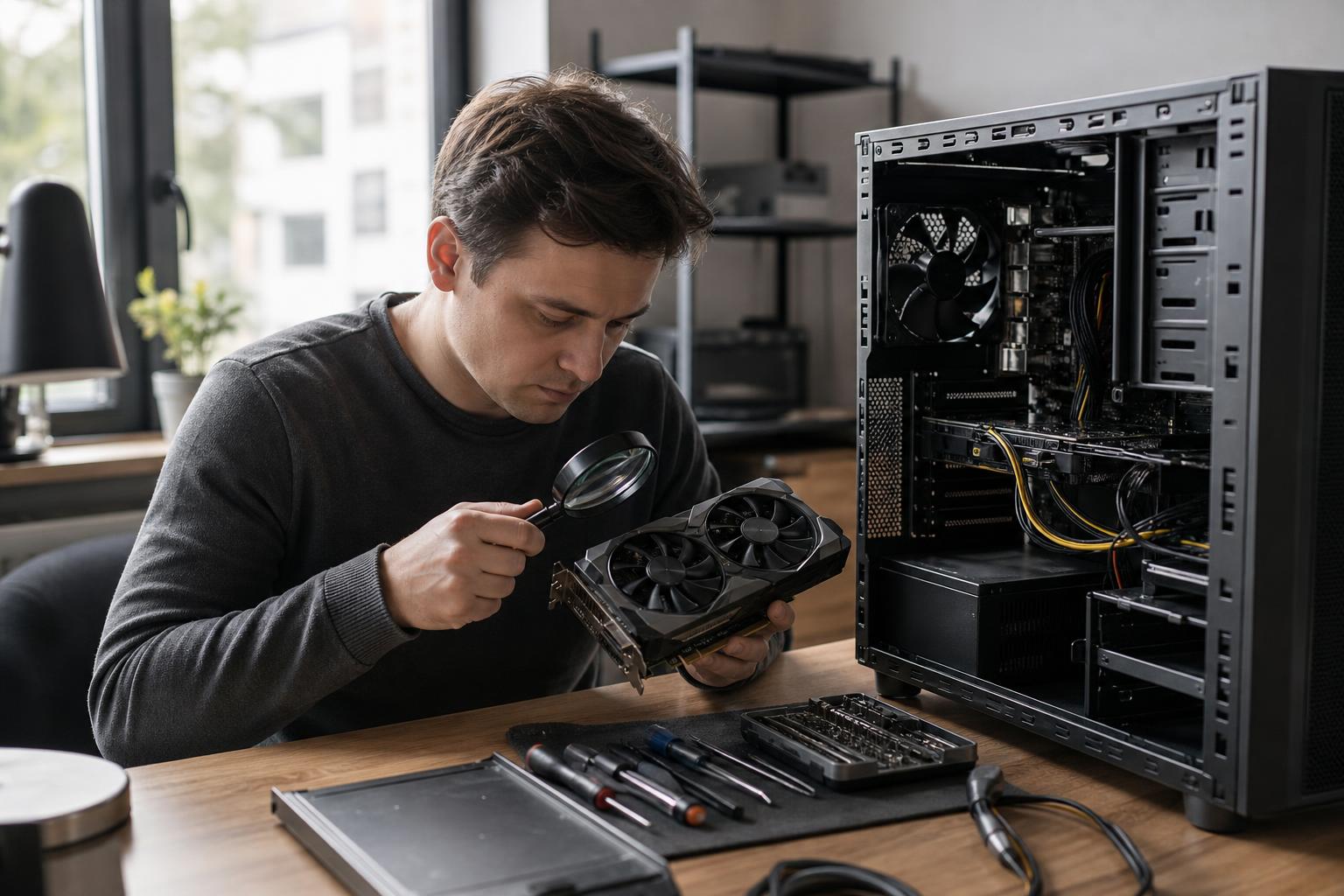
Desktop gaming computer owners may describe graphics-card temperatures that cause throttling, crashes, or shutdowns as one problem, but several components can create the same symptom. Case airflow, dust, failed fans, workload, power, drivers, thermal contact, or a failing GPU can produce similar symptoms.
This guide addresses desktop graphics card overheating specifically. For broader service information, use our computer and gaming-system repair page.
Document the exact behavior first
Record temperatures, fan speed, workload, time to failure, artifacts, crashes, case layout, and whether the behavior changed after moving or servicing the PC.
Record when it began, whether it is constant, and what changed immediately beforehand. A short video or error photo can preserve an intermittent symptom without repeated testing.
Safe checks before service
Shut down, clear exterior vents, verify fans visually without touching them, remove overclocks, use manufacturer drivers, and test with the case in its normal safe configuration.
Use only compatible power and data accessories. Change one condition at a time so the result remains meaningful, and create a current backup while the device is stable.
What the pattern may indicate
- Temperature improves with corrected case airflow can reveal ventilation.
- One GPU fan stopped indicates a cooling fault.
- Artifacts before high temperature may indicate graphics hardware.
- Crashes under load can involve GPU, power supply, memory, or drivers.
These patterns are diagnostic clues, not proof of a failed part. Connectors, firmware, power delivery, physical damage, and board-level circuits can overlap.
Actions that can make the problem worse
Do not run repeated stress tests, touch powered components, use vacuum tools internally, bake the card, or replace thermal pads without exact thickness.
Stop testing if these warning signs appear
Power off for fan grinding, smoke, odor, sparks, severe heat, or repeated hard shutdown.
Disconnect power when safe and do not press a swollen case or damaged connector back into position.
What a professional inspection should cover
Assessment may include case airflow, GPU fans and fins, temperatures, thermal interface, drivers, power cables, power supply, board condition, and controlled load tests.
The exact Desktop gaming computer variant matters because parts, connectors, and internal layouts can differ within the same product family.
Prepare for a repair visit
Bring the device, its normal charger, the full model or product number, and notes about the symptom. Review our device repair appointment checklist before visiting.
Fixit Solutions can inspect supported devices at its Lake Forest storefront. Options and timing depend on condition, diagnostics, authorization, and correct-part availability. Start with the computer and gaming-system repair page.