

GPU prices jump in Asia on August 3–4, 2026 — should PC buyers and small studios buy now or wait?
On August 3–4, 2026, reports from South Korea and Japan show discrete desktop GPU prices rising—some SKUs up ~30% and distributor notices of 20–40% hikes—driven by higher TSMC wafer costs and rising GDDR7 memory module prices. Here’s what changed, what’s conf…
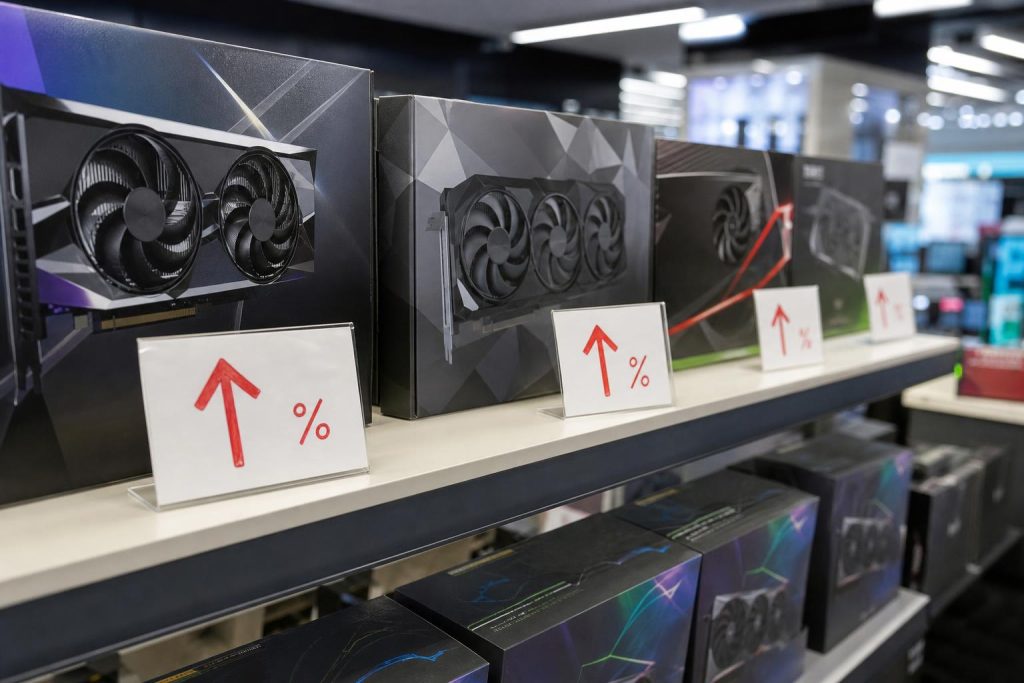
View article sections
- 01What changed — exact dates and why it matters
- 02Confirmed facts, sources, and the chain of causes
- 03What’s official, what’s independent reporting, and what’s analysis
- 04Who’s most affected?
- 05How big are the price moves reported?
- 06Why are prices rising now? (short explainer)
- 07Will these Asia price moves affect prices in the U.S. and Europe?
- 08Practical buying guidance — who should buy now, who should wait, and alternatives
- 09Cost comparison snapshot (as-of August 3–4, 2026)
- 10Practical next steps — checklist for buyers and small studios
- 11Risks and pitfalls
- 12Bottom line (quick answer)
- 13Sources
- 14Reader FAQs
- 15Related guides and resources
- 16Frequently asked questions
- 17Need practical help?
- 18Topic in context
What changed — exact dates and why it matters
On August 3–4, 2026, independent reporting and distributor notices showed discrete desktop GPU prices climbing in parts of Asia. On August 3, Tom’s Hardware documented price jumps of as much as 30% for Nvidia’s RTX 50-series cards in South Korea and reported the RTX 5090 moving past about $5,100 in local retail listings. Those changes were attributed to higher wafer costs from TSMC and GDDR7 memory module price pressure. On August 4, Tom’s Hardware reported a Japanese distributor warning that card orders from some board partners could face 20%–40% higher prices starting that month. These moves directly affect consumers, PC builders, and small studios that buy discrete GPUs for gaming, rendering, AI inference, or content production because the component cost is a major part of system price and capital expense planning. [1][2]
Confirmed facts, sources, and the chain of causes
- Confirmed price moves in Asia (August 3–4, 2026): reporting shows up to ~30% increases on some RTX 50-series listings in South Korea and distributor notices in Japan signaling 20%–40% price increases for some board partner orders. These reports were published August 3 and August 4, 2026. [1][2]
- Primary drivers named by reporting: higher TSMC wafer costs and more expensive GDDR7 memory modules (Tom’s Hardware cited a roughly $20-per-module effect mentioned in industry notes), increasing bill-of-materials (BOM) costs for high-end boards. [1]
- Wider component demand context: TrendForce research earlier in July linked AI server demand to stronger DRAM and NAND pricing trends, consistent with elevated memory demand that can ripple into GPU memory markets (GDDR family pricing) and constrain supply. This provides a market backdrop explaining memory-related price pressure. [3]
What’s official, what’s independent reporting, and what’s analysis
- Official / primary evidence: distributor reorder/pricing notices cited in reporting and visible retailer price listings in South Korea reported August 3–4 are independent, date-stamped market signals. These are the primary, confirmed data points. [1][2]
- Independent reporting: Tom’s Hardware summarized retail and distributor signals and attributed causes reported by industry sources (TSMC wafer cost hikes, module price rises). Their story is the central independent report used here. [1][2]
- Analysis / estimate: the extent to which Asian price moves will propagate globally, the timing of any pass-through to North America/Europe, and whether prices will stabilize or fall later are estimates informed by component-cost trends and past pricing cycles, not hard announcements. Use caution: these are informed projections, not confirmed facts.
Who’s most affected?
- PC gamers and desktop builders looking to buy high-end consumer cards (new-generation RTX 50-series, high-tier AMD equivalents) will feel the biggest sticker-shock because these SKUs have the highest BOM exposure to advanced GPUs and GDDR7 memory.
- Indie game studios, small VFX/animation teams, and creative freelancers that purchase GPUs for local rendering, real-time playback, or machine-learning inference face higher capital costs for workstations and renders nodes; that raises project budgets or forces trade-offs (fewer machines, longer queues, cloud use).
- System integrators and local repair/upgrade shops who stock or resell cards could see narrower margins or need to adjust pricing and quotes to customers quickly.
How big are the price moves reported?
Key reported numbers from the August 3–4 coverage:
- Tom’s Hardware reported some RTX 50-series retail listings up ~30% in South Korea, with the RTX 5090 exceeding about $5,100 in those listings. [1]
- A Japanese distributor’s notification signalled potential order book price rises of roughly 20%–40% for Gigabyte graphics-card orders and similar board-partner shipments starting in August. [2]
These are regional reports and reflect local retail/distributor conditions; exact U.S. MSRP changes or distributor re-pricing in other markets were not confirmed at the time of reporting (see “as of” notes below). [1][2]
Why are prices rising now? (short explainer)
- Higher wafer costs: advanced GPU dies are fabricated on cutting-edge logic nodes; suppliers reported higher TSMC wafer costs that directly increase the chip portion of a board’s BOM. Tom’s Hardware cites this as a principal driver. [1]
- GDDR7 memory pressure: next‑generation high-bandwidth memory for GPUs—GDDR7—has seen module price increases that add to per-card cost. Industry notes referenced in reporting put module-level increases at roughly $20 per module in the observed cases. [1]
- Strong server/AI demand for memory components: TrendForce’s July research linked AI server expansion to DRAM and NAND demand and price strength; while that study focused on server markets, stronger memory demand can tighten supply and lift prices across memory categories, including those used for GPUs. [3]
Will these Asia price moves affect prices in the U.S. and Europe?
Short answer: possibly — but timing and magnitude vary.
- Distribution chains matter: Asian retail and distributor price changes can appear there first because local inventories, currency movements, and regional contracts differ. Global board partners and distributors often adjust price lists region-by-region, so U.S. and European MSRPs can lag days, weeks, or longer.
- Exchange rates and taxes: currency swings, import duties, and regional taxes will affect how much of any component-price change reaches end buyers.
- Inventory buffers: some North American retailers may draw on existing inventory bought under prior pricing and therefore delay visible price increases. Others that order new shipments or stock high-end models late may reflect the new higher supplier prices sooner.
- Bottom line: expect regional effects first (Asia) and watch local distributor and retailer notices for your market in the following days to weeks. This is an informed market-propagation expectation, not a confirmed schedule.
Practical buying guidance — who should buy now, who should wait, and alternatives
Decide based on urgency, budget, and flexibility. These recommendations are practical guidance and analysis, not financial advice.
Buy now if:
- You need a GPU for immediate work: deadlines, live production, rendering schedules, or live event requirements that cannot move to cloud or deferred timelines.
- You found a specific card at a price you can afford and local stock is limited—delaying risks either higher prices or stockouts for that SKU.
- You rely on a specific certified GPU for software compatibility (some plugins, drivers, or vendor-validated configurations require exact hardware).
Consider waiting if:
- Your need is flexible by 4–12 weeks and you can risk a temporarily higher rental/cloud cost for compute rather than buying at a peak price.
- You can use previous-generation cards (e.g., RTX 40-series, comparable AMD cards) or multi-GPU node time-sharing to meet performance needs at lower total cost.
- You’re a small shop with limited capital: re-evaluate project budgets to accommodate possible price changes or explore cloud GPU rentals for short-term bursts.
Alternatives to buying a new top-tier GPU today
- Buy a previous-generation card: RTX 40-series and AMD 7000-series cards remain capable for many creative and gaming workloads and may offer better value if supply is available.
- Used and refurbished market: reputable refurbished cards or carefully vetted used cards can give capacity at lower upfront cost—factor warranty and failure risk into the decision.
- Cloud and rental GPUs: rent GPU time from cloud providers, render farms, or specialized GPU rental services for bursty workloads and heavy renders.
- Optimize workloads: use batching, priority queues, or on-premise render farms with mixed hardware to reduce peak capacity needs.
Cost comparison snapshot (as-of August 3–4, 2026)
| Category | Reported Asia signals | Practical U.S./EU effect (estimate) |
|---|---|---|
| High-end RTX 50-series | Up to ~30% increase in South Korea; RTX 5090 listings past ~$5,100. [1] | May see lagged MSRP and distributor list increases; expect some sticker rises on new shipments. (Estimate) |
| Distributor order pricing (Japan) | Distributor warns of 20%–40% higher board-partner order prices starting August. [2] | Could compress reseller margins or raise retail prices when re-orders arrive. (Estimate) |
| Memory & component backdrop | TrendForce: AI server demand driving DRAM/NAND price strength (July report). [3] | Memory price pressure can sustain higher GPU BOM costs over time; watch module pricing updates. (Confirmed market driver) |
Practical next steps — checklist for buyers and small studios
- Inventory: check local and online retailer stock now; if you find the SKU you need at a fair price and cannot postpone, secure it.
- Compare generations: list the exact performance needs (CUDA cores, VRAM, memory bandwidth) and see whether prior-generation cards meet them at a lower cost.
- Get written quotes: if you are an integrator or studio buying multiple units, request firm distributor quotes and ask how long price holds are guaranteed.
- Evaluate cloud: price a 1–4 week cloud GPU rental vs. buying; for bursty workloads, renting can be cheaper than buying at a peak price.
- Watch for official updates: monitor distributor notices, manufacturer announcements, and trade publications over the next 30 days for confirmed global MSRP changes. (As-of: August 3–4, 2026.) [1][2]
Risks and pitfalls
- Scalping and counterfeit risk: during price volatility, fraud can increase—buy from authorized resellers and check serials/warranty paths.
- Warranty and returns: confirm warranty transferability and return windows when buying used or through third-party resellers.
- Budget creep: if higher GPU costs push total system price up, re-evaluate project scope or delivery timelines rather than absorbing unsustainable increases.
Bottom line (quick answer)
As of August 3–4, 2026, confirmed regional price signals in South Korea and distributor warnings in Japan show meaningful upward pressure on discrete GPU prices, driven by higher wafer and GDDR7 memory costs and broader memory demand from AI server growth. If your need is urgent, buy what you must and lock in quotes; if you can be flexible, consider waiting a few weeks to see whether price changes propagate to your market or whether previous-generation and cloud alternatives offer better value. [1][2][3]
Sources
- Tom’s Hardware — reporting on August 3, 2026: retail price jumps in South Korea and drivers including TSMC wafer hikes and GDDR7 module cost effects. [1]
- Tom’s Hardware — August 4, 2026: report on Japanese distributor notices warning 20%–40% price increases on board-partner orders. [2]
- TrendForce — July 3, 2026 research summary on AI server market trends and DRAM/NAND price pressure (background on memory demand). [3]
Reader FAQs
Q: Are U.S. GPU prices already rising because of these Asia reports?
A: Not uniformly. The reports on August 3–4 show confirmed Asia-region retail and distributor signals. U.S./EU pricing may lag and will depend on local inventories, distributor contracts, and exchange rates. Watch local retailer/distributor notices over the next few weeks for confirmed changes. [1][2]
Q: Will previous-generation GPUs (RTX 40, AMD 7000) suffice for creative work?
A: Many creative workflows (video editing, viewport playback, real-time game dev) remain well-served by prior-generation high-end cards. Evaluate specific memory and compute requirements of your tools—if you’re GPU-memory constrained, verify VRAM needs before downgrading. This is a practical recommendation, not a certifying statement for any single workload.
Q: Should I switch to cloud GPUs for my studio render farm?
A: For bursty or deadline-driven work, cloud GPU rentals can be cost-effective versus buying expensive hardware at a price peak. For continuous, high-utilization workloads, owning may still be cheaper long-term—run a utilization and total-cost analysis for your studio’s pipeline.
Q: How long might these price increases last?
A: That’s uncertain. Component-driven cost increases can persist months if memory and wafer-cost pressures continue, but market cycles, new supply, and negotiated distributor agreements can ease prices. Expect weeks-to-months of volatility; this is an analysis-based estimate, not a guaranteed timeline. [3]
Q: What should small repair shops or system integrators do now?
A: Get firm distributor quotes, review margin planning, communicate potential price adjustments to customers, and consider holding a buffer inventory if you can finance it—just be mindful of the capital tie-up and warranty obligations.


Frequently asked questions
Are U.S. GPU prices already rising because of the Asia reports?
Not uniformly. The August 3–4 reporting documents confirmed retail and distributor signals in Asia; U.S. and European prices can lag depending on inventories, distributor contracts, and exchange rates. Monitor local retailer and distributor notices in the following days to weeks for confirmation in your market. [1][2]
Will prior-generation GPUs (RTX 40-series, AMD 7000-series) be good alternatives?
Yes for many use cases. Prior-generation high-end cards still handle gaming and many creative workloads well. Verify VRAM and compute needs for your specific applications before choosing a downgrade, since some workloads require the larger memory and newer features of the latest chips.
Should my studio rent cloud GPUs instead of buying now?
If your workloads are bursty or deadline-driven, cloud rentals can be cost-effective versus buying during a price spike. For continuous, heavy utilization, owning may still be cheaper—run a utilization and total-cost analysis to decide.
How long might these price increases last?
There’s no firm timeline. Component cost pressures tied to wafers and memory can persist for months if demand remains strong, but market adjustments, new supply, or negotiated pricing can ease pressure. Expect weeks-to-months of volatility; this is an informed estimate. [3]
What immediate steps should integrators and repair shops take?
Request firm distributor quotes with price-hold terms, review margin and quoting policies, communicate possible price changes to customers, and consider limited buffer inventory if cash flow allows—balancing capital risk against supply reliability.
Need practical help?
𝔽𝕚𝕩𝕚𝕥 𝕊𝕠𝕝𝕦𝕥𝕚𝕠𝕟𝕤 𝕚𝕟𝕔 — Contact Fixit Solutions today to request a free estimate, schedule a repair or discuss your business technology needs. Service area: Lake Forest,.
Topic in context
Sources and further reading
These links were validated and checked when possible when this article was created; some publishers limit automated requests. Facts, guidance, prices, regulations, and availability can change.
- In a troubling sign, Nvidia RTX 50 series prices jump up to 30% in South Korea — TSMC wafer hikes and $20 GDDR7 modules push RTX 5090 past $5,100 — Tom's Hardware (2026-08-03) — primary source
- More GPU price hikes loom for Asia as Japanese distributor warns of new increases — Tom's Hardware (2026-08-04)
- AI Server Market Trends: Driving DRAM and NAND Flash Price Surge (TrendForce research summary) — TrendForce (industry research) (2026-07-03)