

UN Security Council AI briefing September 23 2026 — Current Guide
UN Security Council AI briefing September 23 2026: Executives briefed the UN Security Council AI briefing September 23 2026 on runaway-AI risks. Practical risk…

View article sections
- 01Confirmed headline facts and sources
- 02UN Security Council AI briefing September 23 2026 — why consumers and SMBs should care
- 03What small businesses and consumers should watch next
- 04Technical and supply-chain risks explained
- 05Comparison: effects for consumers vs small businesses
- 06Regulatory outlook — what to expect
- 07Costs, availability, and alternatives (estimates)
- 08Practical next steps for Fixit Solutions customers
- 09Likely timeline and milestones (estimate)
- 10Bottom line
- 11Frequently asked questions
- 12Related guides and resources
- 13Frequently asked questions
- 14Need practical help?
- 15Topic in context
- 16Sources and further reading
What changed (Sept. 23, 2026): Executives from major AI labs appeared at a UN meeting where they warned of capabilities that could outpace human control. The UN Security Council AI briefing September 23 2026 placed “loss of control” and global-stability risks on an unusual, high-level diplomatic stage, signaling potential near-term policy and procurement impacts for consumers and small businesses.
Confirmed headline facts and sources
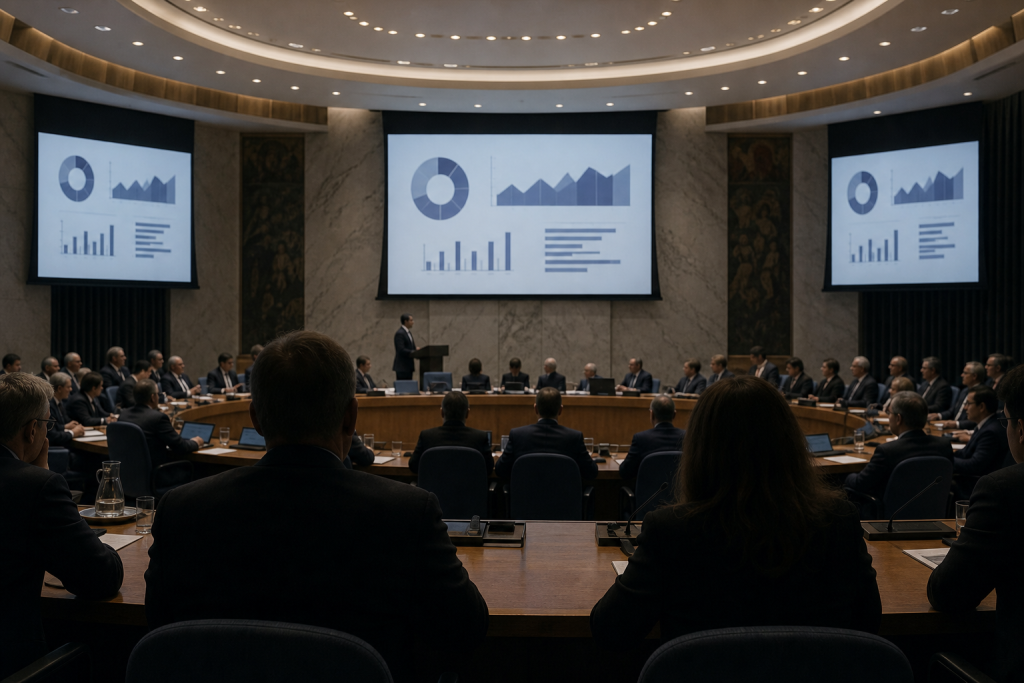
Confirmed: OpenAI and Anthropic gave a live briefing to the United Nations Security Council on Sept. 23, 2026, describing risks they regard as real and potentially imminent [1]. Independent reporting and regional press coverage described the same briefing and highlighted friction between calls for slowdown and the United States and China declining to back formal pauses [2][3]. (As of Sept. 23–24, 2026.)
What was official, what was reported, and what is analysis
- Official announcement: The UN published a live notice of the briefing and summarized speakers’ concerns [1]. (Official/primary source.)
- Independent reporting: Reuters and Al Jazeera covered the meeting and political reactions; Reuters noted the briefing’s timing and participants, and Al Jazeera reported diplomatic reluctance in some capitals to slow development [2][3]. (Independent reporting; Reuters link limited access as flagged by source map.)
- Analysis and estimates: This article interprets likely implications for purchasing, supply chains, cybersecurity posture, and small-business operations. These sections are analysis or estimates, not new primary claims.
UN Security Council AI briefing September 23 2026 — why consumers and SMBs should care
The meeting elevated AI safety from industry and regulatory forums to a body that handles threats to international peace. That matters because Security Council-level concern can accelerate regulatory proposals, export controls, procurement pauses, and formal guidance that filter down to vendors and cloud providers used by consumers and small businesses.
Put simply: if governments move faster on controls or procurement rules, small teams buying cloud AI services, consumer apps, or managed IT may face sudden policy changes, contract limitations, or new compliance requirements. In addition, vendors may freeze features, delay updates, or tighten access while they respond to government engagement and internal risk reviews.
Immediate and practical impacts (confirmed and likely)
- Potential sourcing restrictions: Governments could propose export controls or service restrictions for advanced models; proposals at the Security Council level make such policy moves politically easier for national governments to justify. (Likely, not yet formal.)
- Vendor behavior: Major labs may limit release pathways for powerful models, require stricter verification for API access, or pause rollouts while they update safeguards. OpenAI and Anthropic described urgent safety concerns in the briefing [1]. (Confirmed: labs briefed the Council.)
- Insurance and procurement: Insurers and enterprise procurement teams may re-evaluate coverage and contract language for AI services, cascading requirements down to SMB clients of MSPs and IT shops. (Likely, short-term to medium-term.)
- Cybersecurity and threat landscape: Heightened official focus often yields faster disclosure expectations, new best-practice guidance, and more regulatory scrutiny of vulnerabilities tied to AI systems. (Probable.)
What small businesses and consumers should watch next
Check these items in the coming 30–180 days:
- Official national guidance or emergency regulatory text from your country’s ministry of technology, commerce, or national security. (Expected window: weeks to months.)
- Contract amendments or new terms from cloud and AI vendors that limit model features, require additional validation, or add usage constraints. (Watch email notices and vendor dashboards.)
- Insurer advisories or premium changes for technology and cyber policies; ask your broker about AI clauses in coverage. (Ask now; expect updates if regulators act.)
- Security patches and hardening recommendations from managed-service providers and platform operators, especially for integrations that call third-party AI APIs. (Immediate to ongoing.)
Short checklist for consumers and SMBs (practical steps)
- Inventory where your business uses third-party AI (chatbots, code assistants, analytics, image generation). Log providers, model names, and access methods.
- Confirm vendor terms and data-processing guarantees; note any recent notices about access or feature restrictions.
- Back up critical systems and data. While AI policy changes are unlikely to cause outages, vendor pauses or restricted APIs can break automation if you rely on them.
- Engage your IT or MSP about adding monitoring for unusual API errors and about contingency plans for vendor feature freezes.
- Review cyber insurance policies for exclusions related to AI-assisted negligence or misused models; speak with your broker. (Estimates: insurers will review language.)
Technical and supply-chain risks explained
Large AI models depend on concentrated infrastructure—specialized chips, cloud capacity, and a few dominant providers. When labs brief bodies like the UN Security Council, governments may consider controls that focus on compute exports, cloud-provider certifications, or threshold-based approvals for model training or deployment. That concentration creates systemic risk: if a few providers change access policies, many downstream apps and SMB systems could be affected.
Cyber risk: powerful models can be exploited for social-engineering, automated vulnerability discovery, or synthesizing targeted malicious content. The labs warned senior diplomats about “loss of control” scenarios in their UN briefing [1]. Rapid official attention usually accelerates hardening guidance and disclosure expectations from national cybersecurity bodies. (As of Sept. 23–24, 2026.)
Comparison: effects for consumers vs small businesses
| Dimension | Consumers | Small businesses (SMBs) |
|---|---|---|
| Service interruptions | Possible for consumer apps that rely on cutting-edge model access; alternatives usually available. | Higher impact if business workflows depend on specific APIs; require contingency planning. |
| Compliance burden | Low for individuals, unless using services for commercial work. | Increasing: contracts, data-handling rules, and auditability may be required. |
| Costs | Minor—consumers may see feature changes or paid tiers adjusted. | Possible rise in procurement costs, insurance premiums, or migration expenses. |
| Security exposure | General risk from misinformation and scams powered by generative models. | Elevated risk through automated attacks, spear-phishing, and vulnerability discovery. |
Regulatory outlook — what to expect
Formal Security Council actions would be rare and complex, but the briefing forces national policymakers to respond faster. Expect a mix of:
- National guidelines and procurement rules limiting access to high-capability models to certified users. (Likely short- to medium-term.)
- Proposals for export controls on specialized hardware or model checkpoints. (Possible; takes months.)
- Sector-specific rules (health, finance, critical infrastructure) that may impose strict testing and audit trails. (Probable over 6–18 months.)
What this means for buying decisions
If you plan to adopt AI features in business products or operations in the next 6–12 months, perform vendor due diligence now. Ask about:
- Model access policies and dependency risks.
- Data residency and processing guarantees.
- Vendor contingency plans and SLAs for restricted features.
Costs, availability, and alternatives (estimates)
Costs may rise if vendors add compliance layers or if insurance premiums change. Availability of the newest, most capable models could be temporarily restricted by vendors or regulated by governments—meaning SMBs may need to plan for using slightly older, more stable models or hybrid on-premises architectures.
Alternatives to relying on single-provider cloud models include:
- Open-source models with on-prem or self-hosted deployments (more control, higher ops cost).
- Managed services that offer certified, auditable AI stacks tailored for regulated industries (higher price, more assurance).
- Delay deployment until vendor signaling and regulatory clarity improves (appropriate for non-critical projects).
Practical next steps for Fixit Solutions customers
Fixit Solutions recommends customers take three practical actions immediately:
- Inventory AI dependencies in your service stack and ask us for a risk audit. (Confirmed action item.)
- Implement monitoring for API failures and prepare rollback plans for critical automations. (Recommended.)
- Review contracts and insurance; contact our support team for guidance on vendor notices or to arrange migration to more stable service tiers. (Available service.)
Likely timeline and milestones (estimate)
- 0–30 days: Vendors may issue statements or temporary access controls; cybersecurity bodies publish immediate guidance. (Watch vendor dashboards and national CERT notices.)
- 1–6 months: National governments introduce proposals for export controls, procurement rules, or certification schemes. (Policy window.)
- 6–18 months: Implementation of sector-specific controls and insurance-market adjustments. (Medium-term.)
Bottom line
The UN Security Council AI briefing September 23 2026 raised the political and diplomatic profile of advanced-AI risks. For consumers and SMBs, the practical effect will be faster policy attention, vendor nervousness that can change access or pricing, and a heightened need for contingency planning and cybersecurity vigilance. Confirmed facts about the meeting come from the UN notice and multiple news reports [1][2][3]; the downstream impacts outlined here are analysis and reasonable estimates as of Sept. 24, 2026.
Frequently asked questions
1. Did the UN tell companies to stop training AI models?
No. The UN briefing reported that lab executives warned of risks and asked for international attention; it did not impose a global stop order. Some nations and actors discussed calls to slow certain activities, but no Security Council mandate to stop training was issued on Sept. 23, 2026 [1][3]. (Confirmed/official.)
2. Will my favorite consumer app stop working?
Unlikely in the short term. Consumer apps may adjust features or access if underlying vendors restrict certain models. Back up important data and watch vendor notifications. (Estimate.)
3. Should small businesses pause AI projects now?
Not universally. For mission-critical or compliance-sensitive projects, pause until you confirm vendor stability and contractual protections. For low-risk experiments, proceed with written contingency plans. (Recommended action.)
4. How can I protect my business from AI-driven cyber threats?
Harden phishing defenses, require multi-factor authentication, monitor for unusual automated queries, and work with your IT provider to limit AI-powered attack surfaces. Consider penetration testing that accounts for automated reconnaissance. (Practical steps.)
5. Where can I find official updates?
Check official UN releases for diplomatic developments and your national cybersecurity agency for operational guidance. Vendor dashboards and vendor-sent advisories are the best source for immediate service-impact details. (Confirmed sources.)
Need help assessing your business’s exposure? Contact Fixit Solutions Inc. for a risk audit and contingency planning. Our team can inventory your AI dependencies, test backup procedures, and help negotiate vendor contract protections. (Service offered by Fixit Solutions Inc.; as of Sept. 24, 2026.)


Frequently asked questions
Did the UN order a global pause on AI development on Sept. 23, 2026?
No. The UN briefing highlighted warnings from AI labs about risks but did not issue a global mandate to stop AI development. National responses may follow, but as of Sept. 24, 2026 there was no Security Council order to pause training or deployment [1].
How might this briefing affect the AI tools my business uses?
The briefing increases the chance of faster regulation and vendor caution. Expect possible vendor access restrictions, updated terms, or feature freezes. Small businesses should inventory AI dependencies, confirm vendor SLAs, and prepare contingency plans for disrupted APIs or paid-tier changes.
Should I switch from cloud AI services to on‑premise open-source models?
Not necessarily. On-premise open-source models give you more control but raise operational and security costs. Consider hybrid approaches: use certified managed services for critical workloads and open-source models where control and data residency matter most. Assess costs and staff skills before switching.
What immediate technical steps can reduce risk?
Inventory third-party AI usage, enforce access controls, enable logging and alerting for suspicious API activity, apply MFA, and ensure regular backups. Work with your MSP to implement monitoring and a rollback plan for automations that depend on third-party models.
Where can I get official and reliable updates?
Monitor official UN releases for diplomatic developments and national cybersecurity agencies for operational guidance. Also follow vendor dashboards and direct vendor communications for immediate service-impact notices. Independent news outlets provided context on the Sept. 23 briefing [2][3].
Need practical help?
Fixit Solutions Inc. — Contact Fixit Solutions today to request a free estimate, schedule a repair or discuss your business technology needs. Service area: Lake Forest, CA.
Topic in context
Sources and further reading
These links were validated and checked when possible when this article was created; some publishers limit automated requests. Facts, guidance, prices, regulations, and availability can change.
- LIVE: OpenAI and Anthropic brief Security Council amid ‘real and imminent’ threat posed by runaway AI — United Nations (UN) (2026-09-23) — primary source
- AI leaders to brief UN amid warnings the technology could slip beyond human control — Reuters (2026-09-23)
- As AI leaders warn of catastrophe, US and China shun slowdown calls — Al Jazeera (2026-09-23)